Table of Contents
ToggleLuxury kitchen tiles have become far more than a functional surface, they’re the foundation of a kitchen’s entire aesthetic and performance. Whether you’re drawn to hand-painted Italian ceramics, large-format porcelain slabs, or natural stone with dramatic veining, the right tile elevates your space from ordinary to extraordinary. In 2026, homeowners have unprecedented access to premium materials that combine durability with stunning design, making it possible to create a kitchen that looks and performs like a professional chef’s workspace. This guide walks you through material choices, current design trends, practical maintenance considerations, and styling techniques to help you select and install luxury tiles that match both your vision and your home’s daily demands.
Key Takeaways
- Luxury kitchen tiles combine durability with stunning design by choosing between natural stone, high-end porcelain, and artisanal options—each with distinct maintenance and aesthetic benefits.
- Large-format porcelain slabs and matte finishes dominate 2026 design trends, reducing grout lines and creating a seamless, sophisticated look that hides fingerprints and water spots.
- Porcelain requires minimal sealing compared to natural marble and granite, making it the low-maintenance luxury choice while still delivering the aesthetic appeal of premium materials.
- Epoxy grout outperforms traditional cement-based grout by resisting stains and water damage, justifying the 20–30% additional cost through superior durability and longevity.
- Coordinate luxury kitchen tiles with hardware finishes, countertops, and lighting to create a cohesive design—warm terracotta pairs with brushed brass, while cool blue-gray works with brushed nickel.
- Grout color and tile mixing strategies allow you to invest heavily in statement backsplashes while keeping overall costs reasonable and avoiding visual monotony.
Understanding Luxury Kitchen Tile Materials
Luxury kitchen tiles fall into three primary material categories, each with distinct benefits and trade-offs. Your choice depends on your kitchen’s style, traffic patterns, and how much maintenance you’re willing to commit to.
Premium Natural Stone and Porcelain Options
Natural stone tiles, marble, granite, limestone, and slate, offer unmatched visual depth because each slab is completely unique. Marble’s soft, veined elegance works beautifully in traditional and contemporary kitchens, though it’s soft (3 on the Mohs hardness scale) and porous, requiring regular sealing and careful use around acidic foods and liquids. Granite, much harder at 7 on the Mohs scale, resists scratches and staining better, making it a practical luxury choice for high-traffic kitchens. Limestone and slate provide warm, rustic character but also need sealing and can be slippery when wet.
Porcelain tiles engineered to replicate natural stone, including marble-look, granite-look, and travertine-look options, offer the aesthetic you want with superior durability. Porcelain is fired at extremely high temperatures, making it denser, less porous, and more resistant to staining and moisture than ceramic. High-end porcelain can include textured surfaces, matte finishes, and realistic stone movement that rivals actual marble at a fraction of the cost and maintenance burden. Luxury porcelain also comes in larger formats (24×24 inches or even 30×60 inches), reducing grout lines and creating a seamless, contemporary look.
Handmade and artisanal tiles, often sourced from Portugal, Spain, and Morocco, bring character and craftsmanship to a kitchen. Hand-painted tiles, encaustic patterns, and custom glazes tell a story and become focal points. These are typically more expensive and require careful handling during installation, but they’re unmatched for creating a truly individualized space.
Design Trends and Aesthetic Styles
Kitchen tile design in 2026 leans toward bold, personal expression rather than safe, neutral repetition. The trend toward maximalism in luxury kitchens means homeowners are comfortable layering patterns, mixing finishes, and using tile as a design statement.
Contemporary and Timeless Patterns
Large-format, minimal-grout designs dominate contemporary kitchens. Oversized porcelain slabs with few grout lines create an almost seamless wall or floor, lending a clean, gallery-like quality. Matte finishes, once considered less luxurious, are now seen as refined and practical because they hide fingerprints and water spots better than glossy surfaces. When considering luxury kitchen design ideas, many homeowners pair large-format tiles with minimalist cabinetry and hardware for an understated, sophisticated look.
Patterned and textured tiles are having a major moment. Geometric patterns, Moroccan zellige, subway tile laid in herringbone or chevron patterns, and three-dimensional textured tiles add visual interest and break up monotony. Mixing matte and glossy finishes on the same wall, glossy in a band, matte elsewhere, creates subtle layering that feels curated rather than accidental.
Natural and warm tones like terracotta, warm grays, soft greiges, and creams pair with brushed brass or aged copper hardware for a sophisticated, lived-in elegance. Resources like Remodelista showcase how neutral palettes with intentional texture and finish variation create depth without visual chaos.
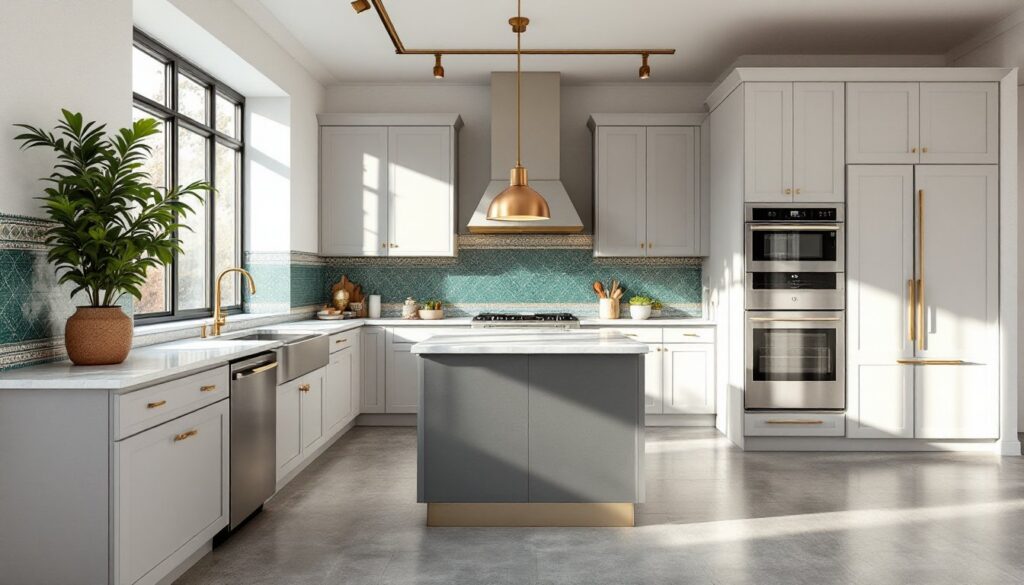
Statement backsplashes using hand-painted tiles, jewel tones (deep teals, emeralds, sapphires), or metallic accents ground the kitchen’s design and prevent the space from feeling sterile. Luxury kitchens increasingly reserve subdued tones for floors and walls, then invest in a bold, artisanal backsplash that draws the eye and reflects personality.
Practical Considerations for Durability and Maintenance
Luxury doesn’t mean fragile. The best tile choices balance aesthetic appeal with realistic wear and tear, especially in a kitchen where spills, heat, and daily foot traffic are unavoidable.
Grout selection matters as much as the tile itself. Epoxy grout (rather than traditional cement-based grout) is stain-resistant, water-proof, and won’t require regular sealing. While more difficult to install and repair, epoxy grout is the choice of many high-end installations because it stays pristine longer. Unsanded epoxy grout works best for grout lines under ⅛ inch wide: sanded epoxy for anything wider. Budget 20–30% extra for epoxy over standard grout, but the durability pays off.
Sealing requirements vary dramatically by material. Natural marble must be sealed immediately after installation and again annually (or more in wet areas). Granite and slate typically need sealing every 1–3 years depending on use. Porcelain needs little to no sealing, making it the low-maintenance luxury option. Always ask your installer which sealers they recommend and how often resealing is required, this affects your true cost of ownership.
Heat and moisture resistance are critical near stoves and in damp corners. Porcelain and granite handle heat well: avoid pure limestone or certain soft natural stones in these zones. Ensure adequate ventilation and backsplash tile extends high enough (at least 18 inches above the countertop, ideally 30–36 inches) to protect from splashing and humidity.
Slip resistance matters on floors, especially around islands or sink areas. Matte, textured, and natural stone surfaces offer better traction than high-gloss finishes. Glazed tiles, while beautiful, can be slippery when wet, a safety consideration if you have children or elderly household members. Test samples by wetting them and checking how they feel underfoot.
Styling Your Kitchen with High-End Tile Finishes
Once you’ve chosen your materials and patterns, styling ties everything together. Luxury tile works best when it coordinates with hardware, countertops, lighting, and cabinetry rather than competing with them.
Hardware and finishes should echo the tile’s undertones. Warm, terracotta-leaning tiles pair naturally with brushed brass or bronze hardware. Cool, blue-gray tiles work beautifully with brushed nickel or stainless steel. Mixing warm and cool finishes is trendy, but requires intentionality, alternate them across the kitchen rather than clustering warm metals on one side.
Countertop synergy is crucial. If your floor tile is busy with pattern, keep countertop colors and patterns subdued. Conversely, a neutral, large-format tile floor gives you freedom to choose a more dramatic countertop material. Stone, quartz, and butcher block countertops all complement luxury tile: the key is ensuring the combination feels cohesive, not chaotic.
Lighting highlights texture and color in ways that few other elements can. Recessed downlights flatten surfaces: track lighting or under-cabinet lighting brings out depth, color, and texture in tile. If your backsplash tile is textured or patterned, ensure it’s lit to showcase that detail, poorly lit luxury tile looks wasted.
Grout color dramatically changes how a tile installation reads. Light grout on light tile creates a seamless, expansive look. Dark grout on light tile emphasizes each individual tile and can feel busy: it’s ideal for patterns or if you want tile to be the focal point. Consider your kitchen’s size and natural light when deciding, large, seamless installations feel more spacious in smaller kitchens. Interior design inspiration across kitchen and bathroom styles demonstrates how grout color choice either unifies or subdivides a space.
Mixing tile types is increasingly common in luxury kitchens. A large-format floor tile pairs with a smaller, patterned backsplash: or a neutral wall is interrupted by one accent wall of handmade tiles. This approach avoids monotony and allows you to invest heavily in a few statement pieces while keeping overall costs reasonable. Transitions between different tiles (where kitchen tile meets dining room flooring, for example) should be handled with threshold moldings or schluter-type trim to avoid tripping hazards and ensure a polished appearance. Luxury kitchens extend to the architectural details, don’t rush the finishing touches.
Conclusion
Luxury kitchen tiles are an investment in both aesthetics and longevity. By understanding material properties, staying aware of 2026 design trends, prioritizing durability and maintenance from the start, and coordinating tile with surrounding elements, you’ll create a kitchen that’s genuinely beautiful and truly functional. The best tile choice is one that aligns with your lifestyle, not just your Pinterest board.