Table of Contents
ToggleA truly luxurious bathroom starts with details that feel good underfoot, literally. Bathroom rugs aren’t just functional catch-alls for water splashes: they’re textile anchors that set the tone for your entire bathing experience. Whether you’re stepping onto a thick, plush surface after a shower or padding across a carefully chosen Turkish cotton weave, the right luxury rug transforms a utilitarian room into a personal spa. In 2026, homeowners are prioritizing both tactile comfort and lasting quality, investing in bathroom rugs made from premium fibers and thoughtful construction that withstand moisture, foot traffic, and time. This guide walks you through what separates a luxury rug from the ordinary, which styles work best in modern bathrooms, and how to choose and maintain one that justifies the investment.
Key Takeaways
- Luxury bathroom rugs are defined by high weight (1,000+ GSM), premium fibers like Turkish or Egyptian cotton, and construction methods that resist pilling and maintain softness for years.
- Turkish and Egyptian cotton are gold-standard materials for luxury bathroom rugs due to their absorbency, durability, and ability to get softer with each wash, while wool blends and bamboo viscose offer eco-friendly alternatives with built-in stain resistance.
- Modern luxury bathroom rug styles in 2026 favor solid neutral colors, subtle geometric patterns, and textured weaves over busy prints, with earth tones and jewel tones trending for curated, intentional design statements.
- Proper sizing and placement—positioning rugs where you step out of the shower and leaving 6–12 inches clearance—ensures both functional moisture absorption and visual proportion in your bathroom space.
- Maintaining a luxury bathroom rug requires weekly vacuuming, prompt air-drying after use, gentle machine washing every 2–3 weeks, and proper storage to preserve fiber quality and prevent mildew for five+ years of performance.
What Makes a Bathroom Rug Truly Luxurious
Luxury in a bathroom rug comes down to a combination of fiber quality, construction methods, and performance durability. A truly luxurious rug feels substantial in your hands, doesn’t pill or shed after a few washes, and maintains its shape year after year. It’s the difference between a rug that looks beautiful in month one and one that still feels plush and looks pristine in year five.
The foundation of luxury is weight, measured in grams per square meter (GSM). Premium bathroom rugs typically weigh 1,000 GSM or higher, compared to budget rugs that hover around 400–600 GSM. This density means more fiber per square inch, translating to softness that actually lasts and better moisture absorption. Luxury rugs also feature tight, even loops (or plush pile construction) that resist unraveling and matting. Lower-quality rugs often develop visible wear patterns within months: a luxury rug maintains its uniform surface even in high-traffic zones like the area in front of the toilet or shower entrance.
Dye methods matter too. Premium rugs use solution-dyed fibers (color is added before the fiber is extruded) rather than surface dyes that fade with repeated laundering. This ensures colors remain vibrant through dozens of wash cycles. The backing, typically reinforced latex, non-slip material, or wool, anchors the pile and prevents shifting on tile or wood floors.
Premium Fiber Types and Materials
Turkish cotton is a gold standard in luxury bathroom textiles. It’s long-staple, absorbent, and gets softer with every wash due to its cellular structure. Premium Turkish cotton rugs from brands sourcing high-quality yarns deliver a cloud-like feel and genuine durability. Look for 100% Turkish cotton or blends where it comprises at least 80% of the fiber content.
Egyptian cotton ranks equally high, sometimes even higher by weight and absorbency. The extra-long staple fibers mean fewer knots and seams, creating a seamless, luxurious hand feel. It resists pilling and retains color brilliance through countless cycles.
Wool blends (especially merino wool mixed with cotton or synthetic fibers) offer luxury with built-in stain resistance and natural fire-retardant properties. Pure wool can be too warm for bathrooms in some climates, but blends balance temperature regulation with softness. They’re also naturally antimicrobial, reducing odor and mildew risk, a real advantage in steamy bathrooms.
Bamboo viscose has emerged as a luxury eco-friendly option. It’s hypoallergenic, incredibly soft, and highly absorbent. But, bamboo rugs require more careful drying to prevent mildew: hang-drying is ideal. Microfiber (polyester-based) luxury rugs are fade-resistant and stain-resistant, though purists argue they lack the “breathability” of natural fibers.
Linen-cotton blends offer a more rustic luxury, less plush but textured and elegant. They’re ideal for modern, minimalist bathrooms where a sleeker aesthetic trumps cloud-like softness.
Top Luxury Rug Styles for Modern Bathrooms
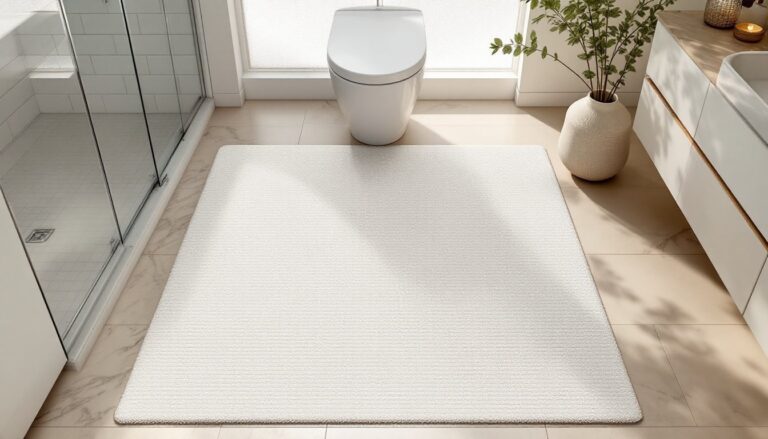
Modern luxury bathroom rugs lean into clean lines, neutral color palettes, and thoughtful texture rather than ornate patterns. Solid-color plush rugs in white, cream, charcoal, or soft gray dominate 2026 trends. These create a spa-like backdrop and hide water stains better than patterned options, a practical luxury that also reads as timeless.
Geometric patterns are gaining traction, especially subtle linear designs in tone-on-tone colors. A charcoal rug with faint diamond or chevron texture adds visual interest without overwhelming a small bathroom. These patterns also mask wear patterns naturally.
Waffle-weave and linen textures bring sophisticated texture without busy patterns. The woven structure provides grip underfoot (important for wet surfaces) and a more tailored, designer look. Interior design trends from leading sources show that texture-forward simplicity now outpaces busy prints in luxury home bathrooms.
Large format runner-style rugs are popular in master baths. A 2.5 × 5-foot runner positioned between the vanity and toilet creates a unified, spa-resort feel. Smaller square rugs (24 × 36 inches) work for powder rooms and modest bathrooms, practical without overdoing it.
Color palettes trending in 2026 emphasize earth tones (warm grays, soft terracotta, sage) alongside classics like white and navy. Jewel tones (emerald, sapphire) are emerging for homeowners seeking a bolder statement, particularly in bathrooms with neutral tile and fixtures. Luxury doesn’t mean bland: it means intentional and restrained. Upscale home design sources confirm that muted, curated color schemes are the hallmark of contemporary luxury bathrooms.
How to Choose the Perfect Luxury Bathroom Rug for Your Space
Start by assessing your bathroom’s moisture level and traffic. A master bath shower area needs a highly absorbent, quick-drying rug: a powder room with minimal moisture can prioritize aesthetics. High-traffic areas (in front of the toilet, near the shower door) warrant denser, more durable fibers.
Measure your bathroom carefully, including the dimensions of vanity areas, floor space between fixtures, and entryway zones. Luxury rugs often command premium pricing, so sizing correctly saves both money and frustration.
Consider the underfoot feel you want. Turkish or Egyptian cotton delivers maximum softness and absorbency, ideal for barefoot lounging. Wool blends offer resilience and natural stain resistance. Linen-cotton or waffle-weave options provide texture and grip without extreme plushness.
Color and pattern should complement your tile, wall paint, and vanity. White or cream rugs look luxurious but stain visibly: darker rugs hide wear but can feel heavier in smaller bathrooms. Solid colors are timeless: gentle patterns add personality without dating quickly.
Size, Placement, and Layout Considerations
Standard bathroom rug sizes include 20 × 30 inches (perfect for small bathrooms and powder rooms), 24 × 40 inches (versatile mid-size), and 30 × 48 inches or larger for master baths. Runners work well in narrow bathrooms: avoid oversized rugs that bunch, slide, or overwhelm the space.
Placement matters functionally and aesthetically. Position the rug so that when you step out of the shower, you land on it, typically in front of the tub or shower door. In vanity-centric bathrooms, center the rug in front of the sink or use a runner to connect sink and toilet areas.
Layering is a luxury design tactic: a smaller decorative rug atop a larger, functional cotton mat beneath. This adds visual interest and allows easy washing of both pieces. Ensure underlayment or non-slip padding is rated for wet environments: bathroom-specific gripper pads prevent sliding on tile and reduce mold risk under the rug.
Clearance is important too. Leave 6–12 inches around the rug’s edges so you’re not stubbing toes on corners. In small bathrooms, a 20 × 30 rug often feels more proportional than a 30 × 48 that crowds the space.
Care and Maintenance Tips for Long-Lasting Luxury Rugs
Luxury bathroom rugs demand intentional care to justify their price tag. Regular vacuuming (with a low-pile setting or handheld brush) removes dust, lint, and bathroom debris that can trap moisture. Vacuum at least weekly in high-traffic bathrooms.
Moisture management is critical. Hang or lay the rug flat to dry after baths or showers, never leave it crumpled on wet tile. Many luxury rug owners hang their bathroom rugs outside or over a shower rod to air-dry daily. This prevents mildew, odor, and fiber degradation. In humid climates, consider a second rug to rotate while one dries.
Washing frequency depends on use. A lightly-used powder-room rug might need washing every 4–6 weeks: a master-bath rug in daily use should wash every 2–3 weeks. Most premium cotton rugs are machine-washable on gentle or delicate cycles with cold water. Use mild detergent (avoid bleach unless the rug is white) and skip the dryer, heat damages fibers and backing. Lay flat or hang to dry in a well-ventilated area or outdoors in sunlight (sunlight naturally brightens whites and sanitizes). Luxury home care standards emphasize air-drying as essential for preserving both fiber integrity and color vibrancy.
Spot-treat stains immediately. Blot (don’t rub) liquid spills with a clean cloth. For stubborn marks, a solution of equal parts white vinegar and water or a mild carpet cleaner designed for delicate fibers works well. Test any cleaning solution on a hidden corner first.
Store damp rugs properly: never in a sealed plastic bag (traps moisture and breeds mold). Roll loosely in breathable cotton, hang in a dry closet, or lay flat on a shelf with air circulation. Check periodically to ensure dryness and prevent musty odors.
With these practices, regular vacuuming, prompt air-drying, gentle washing, and intentional storage, a quality luxury bathroom rug will remain soft, vibrant, and hygienic for five years or more.
Conclusion
Investing in a luxury bathroom rug is investing in a daily comfort ritual. The tactile pleasure of stepping onto premium Turkish cotton or Egyptian cotton, the visual harmony of a thoughtfully chosen color, and the assurance of durability rewarded by proper care elevate the entire bathroom experience. Whether you prioritize maximum softness, stain resistance, or design sophistication, the luxury options available in 2026 offer something for every bathroom and budget tier. Choose materials and styles that align with your lifestyle, measure twice, and commit to simple maintenance habits, and your luxury rug will deliver years of that spa-like feeling underfoot.