Table of Contents
ToggleA luxury patio has become less of a nice-to-have and more of an essential extension of the modern home. Whether you’re hosting intimate dinners, unwinding after a long week, or simply soaking in the outdoors, a well-designed patio elevates everyday moments into something special. The good news: you don’t need a limitless budget to achieve that high-end feel. With thoughtful choices in materials, layout, and finishing touches, homeowners can create an outdoor space that rivals resort-quality design. This guide walks you through the key elements that define luxury patios and shows you how to build one that fits your lifestyle and budget.
Key Takeaways
- A luxury patio is defined by intentional design and quality execution rather than size or budget, with high-grade materials, functional zones, and seamless integration with your home’s architecture.
- Invest 40–50% of your patio budget in premium flooring and structural elements like natural stone or porcelain pavers, as these permanent features set the tone and won’t need replacement for decades.
- Layered lighting—ambient, task, and accent—transforms a luxury patio into a sophisticated evening retreat, with low-voltage LED systems and dimmable controls offering the best balance of brightness and mood.
- Create distinct activity zones using elevation changes, paving patterns, or pergolas rather than walls, and leave 3–4 feet of clear walking space to avoid a cramped feel.
- Extend your luxury patio’s usability year-round with comfort features like ceiling fans, misting systems, and heating elements that offer practical value beyond aesthetics.
- Prioritize hiring professionals for structural work like grading, drainage, and electrical installation, then DIY finishing touches to save 20–30% while maintaining safety and building code compliance.
What Defines a Luxury Patio
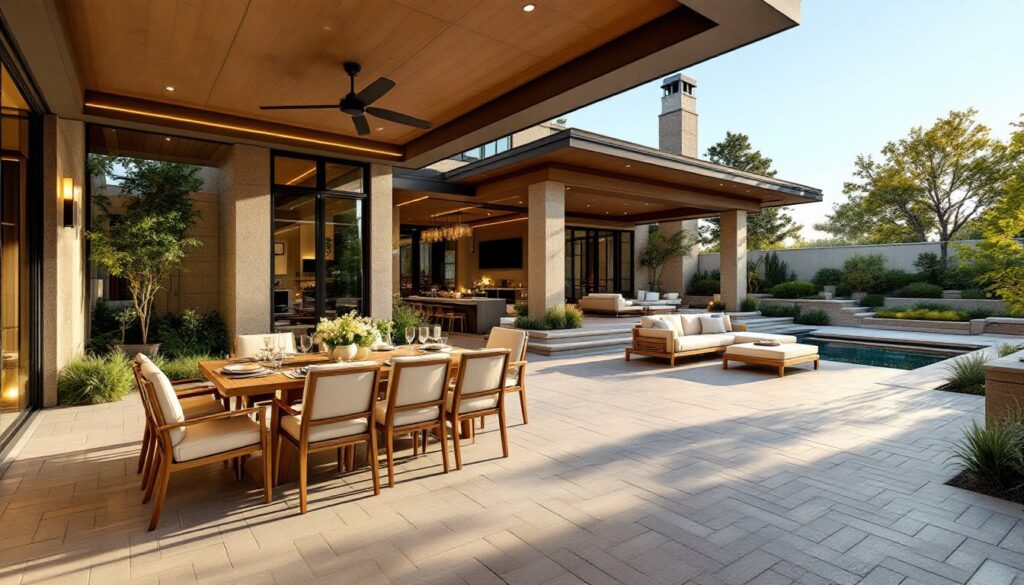
A luxury patio isn’t just about size or price tag, it’s about intentional design and quality execution. Luxury patios share common traits: they’re functional year-round, blend seamlessly with the home’s architecture, offer distinct zones for different activities, and use durable, high-grade materials that age beautifully.
The difference between a standard patio and a luxury one often comes down to how thoughtfully the space addresses the homeowner’s actual needs. A luxury patio feels curated rather than assembled. Every element, from material selection to furniture placement to lighting, serves a purpose while maintaining visual cohesion.
Accessibility also matters. True luxury includes wide sight lines, comfortable transitions between zones, and features that work intuitively without feeling over-engineered. When you’re enjoying an evening in your outdoor space, you shouldn’t feel like you’re troubleshooting a complicated system: you should simply relax.
Essential Elements of High-End Patio Design
Premium Flooring and Materials
Your patio foundation sets the tone for everything else. High-end patios typically use materials that combine durability with visual refinement. Natural stone like slate, granite, or travertine offers timeless appeal and weathers gracefully. Porcelain pavers, increasingly popular for luxury spaces, mimic stone’s aesthetic while offering superior stain resistance and consistent sizing for clean, professional installations.
When selecting flooring, account for both actual dimensions and visual impact. A 24″ × 24″ porcelain slab creates stronger sight lines than smaller 12″ × 12″ pieces. Herringbone or running-bond patterns add sophistication but require precise cuts: expect to pay a 15–20% premium for installation labor.
Don’t overlook underlayment and proper drainage. Polymeric sand, used between pavers, prevents weed growth and material shift while maintaining flexibility in freeze-thaw cycles. In areas with seasonal freezing, this small detail prevents costly repairs. Consider permeable options if local codes encourage stormwater management.
Furniture and Comfort Features
Luxury patios prioritize comfort without sacrificing looks. High-end outdoor furniture uses marine-grade teak, powder-coated aluminum frames, and solution-dyed acrylic fabrics that resist fading and mildew. Unlike off-the-shelf pieces, luxury outdoor furnishings are scaled to your space and often custom-configured.
Beyond seating, comfort features like ceiling fans, misting systems, and heating elements extend usability. A 48″ outdoor ceiling fan can cool a patio by up to 8 degrees Fahrenheit on hot days. Gas or electric heaters allow shoulder-season entertaining when temps drop. These aren’t indulgences, they’re practical investments that increase how many months per year you can enjoy the space. When homeowners are considering luxury homes architecture, outdoor living features rank high on their priority list.
Lighting and Ambiance for Evening Entertaining
Lighting transforms a patio from day-use-only into a sophisticated evening retreat. Luxury patios use layered lighting: ambient fixtures for general illumination, task lighting for cooking or reading, and accent lighting to highlight architectural features or landscaping.
Recessed soffit lights or linear LED strips under overheads provide even ambient glow without glare. Solar-powered path lights are energy-efficient but dimmer: if visibility matters, low-voltage LED systems (typically 12V or 24V) offer better control and brightness. Uplighting on specimen plants or textured walls adds depth and creates an outdoor “room” feel.
Dimmable controls let you adjust mood, bright for cooking, soft for conversation. Smart lighting systems integrate with your home automation, allowing preset scenes for different occasions. A modest dimmer switch costs $50–150 but dramatically improves the perceived quality of the space. Install lighting during patio construction when running conduit and junction boxes is easiest: retrofitting after the fact requires cutting into finished surfaces.
Creating Zones for Relaxation and Entertainment
The most luxurious patios don’t feel like one big deck: they’re divided into functional zones that give guests permission to do different things. A dining zone might center on a solid table with 6–8 seats and task lighting overhead. A lounge area uses lower seating and softer ambient lighting for conversation. A kitchen or prep station keeps food and beverage service separate from leisure seating.
Use design elements to define zones without walls. A change in elevation (a few steps up to a raised seating area), a shift in paving pattern, or a pergola overhead all signal a boundary psychologically. When considering luxury custom homes, outdoor space design that offers distinct activities is a major selling point.
Spacing matters: leave at least 3–4 feet of clear walking space between zones so traffic doesn’t feel cramped. Oversized patios (500+ sq. ft.) can support three or more distinct zones: smaller spaces need careful planning to avoid feeling cluttered. Furniture arrangement is equally important, don’t push everything to the perimeter. Float a conversation seating group in the middle of the space for intimacy and visual interest.
Budget-Smart Tips for Achieving Luxury Appeal
Luxury doesn’t require bottomless spending if you prioritize strategically. Invest heavily in flooring and structural elements, they’re permanent and set the overall tone. Premium paving might represent 40–50% of your patio budget, but it’s worth it because you won’t replace it in five years.
Be flexible on furniture. High-end built-in benches with storage cost $2,000–5,000 but blend permanently with the space. Modular outdoor furniture ($1,500–3,000 for a sectional set) offers luxury aesthetics with easier replacement if fabrics wear. Mix investment pieces with strategic budget finds: a designer umbrella paired with mid-range lounge chairs reads as intentional, not mismatched.
Skip expensive automation for non-essential features. Programmable irrigation for planter boxes is nice: smart patio umbrellas are luxury theater. Instead, prioritize durable hardscape and quality lighting, visible, functional elements that guests notice immediately. A luxury real estate trends report shows buyers increasingly value permanent outdoor features over trendy gadgets.
Outsource strategically. Hire professionals for grading, drainage, electrical runs, and gas lines, mistakes here are costly and dangerous. DIY the finishing touches: staining a pergola, planting containers, or arranging furniture. This balanced approach saves 20–30% while ensuring structural integrity. Don’t attempt load calculations for permanent shade structures or gas appliance installations without licensed experience: your local building code (NEC for electrical, IBC for structural) exists to protect you and future buyers.