Table of Contents
ToggleA luxury velvet sectional sofa isn’t just furniture, it’s an investment in comfort, style, and how you actually live in your home. Whether you’re redesigning a living room or upgrading your lounge, a velvet sectional brings sophistication and visual warmth that other pieces struggle to match. The 2026 market offers more options than ever: performance fabrics that resist staining, modular designs that fit tight spaces, and rich colorways from jewel tones to neutral hues. But with premium pricing and long-term commitment comes the responsibility to choose wisely, style confidently, and maintain properly. This guide walks you through everything you need to know to select the right velvet sectional and keep it looking sharp for years.
Key Takeaways
- A luxury velvet sectional sofa combines comfort and sophistication while offering practical layout flexibility, making it a smart investment for modern home design.
- Prioritize frame construction with kiln-dried hardwood, eight-way hand-tied springs, and high-density foam—these durability factors determine whether your sectional lasts 3 or 10 years.
- Choose velvet with 12–18 ounces per square yard pile weight and consider viscose-polyester blends or performance fabrics for households with kids or pets to balance softness with stain resistance.
- Style your velvet sectional by letting it anchor the room—use neutral tones in open spaces or jewel tones in dedicated living rooms, and always factor in viewing distance and scale.
- Extend your sectional’s lifespan by rotating cushions every 2–3 months, protecting against sunlight, spot-cleaning immediately with cool water, and applying fabric protectant at purchase.
Why Velvet Sectionals Dominate Luxury Home Design
Velvet commands attention in a room. Its raised pile catches light differently than linen or leather, creating depth and visual interest that reads as intentional luxury. Homeowners drawn to high-end interiors often gravitate toward velvet sectionals because they deliver the upscale feel of designer homes without requiring custom furniture budgets.
The appeal also comes down to comfort. Velvet’s soft pile feels exceptional against skin, and a spacious sectional configuration invites people to actually settle in and relax. Unlike sleek leather that can feel cold, or flat fabrics that show wrinkles, velvet maintains a composed, polished appearance even after regular use.
Beyond aesthetics, sectional sofas offer practical layout flexibility. An L-shaped or U-shaped velvet sectional anchors a room and defines the seating zone more definitively than separate pieces. For families or homes that frequently host guests, the extended seating and modular nature of sectionals make them smarter than a traditional sofa and chair combo.
Market trends through 2026 also reflect a shift toward jewel tones, emerald, sapphire, deep plum, paired with warm metals and natural wood accents. Modern luxury home designs featured across design publications showcase velvet sectionals as centerpieces in both contemporary and transitional spaces, proving the style’s staying power beyond fleeting trends.
Key Features to Look for in a High-Quality Velvet Sectional
Not all velvet sectionals are created equal. Several technical and structural factors separate a 3-year sofa from a 10-year investment.
Fabric Quality and Pile Weight
Velvet density and pile weight directly affect durability and how the fabric ages. Measure pile weight in ounces per square yard, heavier pile generally means longer life and better resistance to matting, though it can feel slightly less plush than lighter, more delicate weaves. A quality luxury velvet typically runs 12–18 ounces per square yard.
Also check the fiber content. 100% viscose velvet feels buttery soft but shows wear patterns (shine marks) faster than blends. Viscose-polyester blends (often 75/25 or 80/20) offer better durability while preserving that signature luxury feel. For households with kids or pets, performance velvet, made with solution-dyed polyester or specialty fibers like Crypton, resists staining and shedding without sacrificing softness.
Look for a tight, uniform pile with no loose fibers when you inspect samples in person. Run your hand both directions: high-quality velvet should feel equally smooth in each direction without obvious pilling or shedding.
Frame Construction and Durability
The frame is the skeleton. Kiln-dried hardwood (oak, poplar, or maple) is standard in luxury sectionals and resists warping better than soft wood or plywood. Verify the frame is double-doweled and corner-blocked, not just nailed, this construction distributes stress across seams and joints.
Spring systems matter too. Eight-way hand-tied springs combined with a hardwood frame indicate premium construction. Some modern sectionals use sinuous (serpentine) springs or Hi-Density foam cores, which are acceptable alternatives if properly engineered, but hand-tied systems remain the gold standard for longevity.
Inspect the legs. Solid wood legs (preferably walnut or oak with a stain or finish) convey quality and allow easier cleaning underneath. Plastic feet feel cheap and can stain flooring. Ask about cushion cores too, high-density, virgin polyurethane foam (2.5–3.0 pounds per cubic foot) resists sagging better than recycled or lower-density alternatives.
Styling Your Velvet Sectional in Different Room Layouts
A velvet sectional’s visual weight and texture influence the entire room’s design direction. Think of it as the anchor: everything else should support it.
In open-concept spaces, a neutral velvet sectional (cream, greige, or light gray) prevents the room from feeling choppy. Pair it with accent pillows in contrasting textures, linen, leather, or subtle geometrics, to add visual interest without competing for attention. Layering a natural fiber rug (jute or sisal) underneath grounds the sectional and visually separates the seating zone.
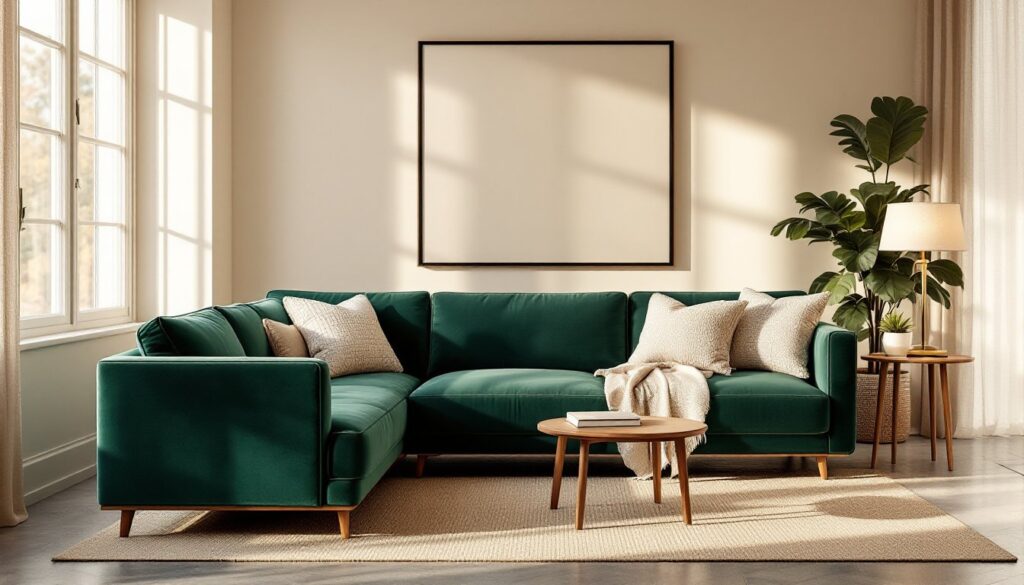
In dedicated living rooms, go bold. Deep jewel tones like emerald or sapphire velvet can anchor a sophisticated palette when balanced with warm wood tones, soft brass fixtures, and layered lighting. A jewel-toned sectional actually simplifies styling because it makes a statement on its own. Add restraint elsewhere, a single statement art piece, neutral walls, and curated accessories.
For tight layouts, consider a chaise sectional or loveseat sectional rather than a sprawling U-shape. Measure your space including doorways and clearance for opening drawers or doors. A sectional that crowds a room reads as cluttered, not cozy. Modern sectional designs prove that even compact configurations deliver luxury impact when chosen thoughtfully.
Light and scale matter. In smaller rooms or homes with low ceilings, a lower-profile sectional with exposed legs visually opens the space. In larger rooms, a deeper sectional with higher arms and seat depth creates a more enveloping, luxurious feel. Always factor in viewing distance, a TV-facing sectional should position viewers 8–10 feet from the screen for comfortable sight lines.
Care and Maintenance Tips for Long-Lasting Beauty
Velvet requires intention but not obsessive fussing. Most damage comes from moisture, direct sunlight, and neglected spills.
Preventive measures come first. Keep the sectional away from direct sunlight or install UV-filtering window treatments: sunlight fades and weakens velvet fibers over time. Rotate and flip cushions every 2–3 months to distribute wear evenly. This simple habit extends the visible life of the sofa dramatically.
Spot-clean spills immediately. Blot (don’t rub) fresh spills with a white cloth and cool water. For liquids, work from the outside of the stain inward to prevent it from spreading. Never use hot water or scrub aggressively, this damages pile and spreads the stain deeper into the backing.
Vacuum gently with an upholstery attachment once a month to remove dust and debris. Use low suction on velvet to avoid crushing the pile or pulling fibers. Alternatively, use a soft brush attachment. Some velvet owners use a lint roller strategically on seams where dust collects, but skip this on the main surface.
For stubborn stains, use dry-cleaning methods first. Sprinkle baking soda on the area, let sit 15 minutes, then vacuum carefully. For set-in stains, a small amount of white vinegar mixed with cool water (1:3 ratio) dabbed with a cloth works on many spills. Test on a hidden seam first. Avoid alcohol-based cleaners, which can strip color or damage the pile.
Professional cleaning every 1–2 years (depending on use) is reasonable for high-traffic sectionals, especially in households with children or pets. A certified upholstery cleaner with velvet expertise ensures proper technique and prevents fiber damage that DIY methods might cause. Budget roughly $200–400 for a sectional-sized cleaning.
Protect fabric upfront if your sectional sees heavy use. Design professionals recommend applying a fabric protectant like Scotchgard or Crypton Guard at purchase. This creates a barrier against spills and staining without changing the fabric’s feel. Reapply every 2–3 years for optimal protection.
For pilling or matting, resist the urge to pick or scissors-trim visible pills. Use a fabric shaver or de-pilling device (available at hardware and upholstery supply stores) to carefully remove pills without damaging fibers. Move gently across the surface: aggressive use can thin the pile permanently.
Conclusion
A luxury velvet sectional is a long-term home investment that rewards thoughtful selection and consistent care. Focus on frame construction, fiber quality, and honest durability specs rather than brand name alone. Style confidently around your chosen piece, let its richness and texture do the visual heavy lifting. With preventive maintenance and prompt attention to spills, your velvet sectional will deliver the comfort and sophistication you’re paying for, maintaining its elegance well into the next decade.