Table of Contents
ToggleA 24×8.5-foot luxury modern tiny house on wheels represents far more than a downsized living space, it’s a carefully engineered ecosystem balancing premium materials, smart design, and genuine livability. For homeowners tired of oversized mortgages, endless maintenance, and static roots, these mobile sanctuaries offer an alternative that doesn’t compromise on comfort or style. The 24-foot length provides enough floor area for separate sleeping, living, and kitchen zones, while the luxury specification means hardwood flooring, high-end appliances, and finishes typically found in homes triple the size. Whether you’re exploring this as a full-time residence, a vacation retreat, or an investment in sustainable living, understanding the practical realities, design trade-offs, material choices, and maintenance demands, will help you decide if this investment aligns with your lifestyle and budget.
Key Takeaways
- A luxury modern tiny house on wheels costs $80,000–$200,000 and offers permanence without traditional real estate commitment, making it ideal for remote workers and retirees.
- The 24×8.5-foot format delivers 192 square feet of usable space with smart zone design including a loft bedroom, central living/kitchen area, and full bathroom that prioritizes comfort over square footage.
- Premium materials—hardwood flooring, custom cabinetry, residential appliances, and designer finishes—prevent the cramped feeling typical of standard mobile homes.
- Hidden ownership costs include towing and specialized insurance ($800–$2,000 annually), annual roof sealant resealing, trailer tire replacement ($1,500–$3,000), and parking fees that can significantly impact your budget.
- Success with a luxury tiny house on wheels depends on verifying local zoning laws, testing the lifestyle through a rental trial, and honestly assessing whether 192 square feet meets your long-term living needs.
What Makes a Luxury Tiny House on Wheels Worth the Investment
A luxury tiny house on wheels isn’t just a smaller version of a standard mobile home. The difference lies in engineering precision, materials selection, and the integration of features that maximize both function and aesthetics in tight quarters. These units typically cost between $80,000 and $200,000 depending on specifications, versus $40,000 to $80,000 for a standard tiny house.
The value proposition centers on three pillars: permanence without traditional real estate commitment, minimal maintenance overhead, and the ability to relocate without selling. A quality tiny house sits on a trailer frame engineered to highway standards, making it mobile yet structurally sound for long-term habitation. Interior upgrades, heated floor underlayment, premium insulation packages, and composite decking on external stairs, add durability and comfort in ways that resist the wear typical of frequent towing.
Lifestyle flexibility makes this investment compelling for specific demographics. Remote workers eliminating long commutes, retirees seeking reduced living costs without sacrificing quality, and adventure seekers wanting a home base find real value. The mobility factor alone eliminates realtor fees, property taxes in some jurisdictions, and the emotional friction of selling a house. From a practical standpoint, luxury tiny homes for sale represent an emerging category that blurs the line between RV and residential dwelling, offering permanence without the bureaucratic overhead of traditional home ownership.
Design Features and Layout Optimization for Maximum Comfort
Smart Space Planning in Compact Dimensions
A 24-foot length with 8.5-foot width leaves 192 square feet of usable floor space (minus wall thickness and chassis). Experienced designers treat every inch as negotiable real estate. The most functional layouts divide the space into three zones: a sleeping loft or murphy-bed area at one end, a central living/kitchen zone, and a full bathroom tucked toward the other end.
Loft bedrooms work best when positioned above the tow hitch area, where the ceiling height of 6 feet 6 inches accommodates a queen-size mattress without claustrophobia. Stairs or ladders accessing the loft should be sturdy and code-compliant, many luxury units use pull-down staircase mechanisms or angled steps that double as storage drawers. The living area typically features a sofa (often L-shaped or convertible), a compact dining table that folds or extends, and entertainment built into wall-mounted systems rather than freestanding furniture.
Kitchens in this footprint rarely exceed 8 linear feet. The solution: galley-style layouts with appliances stacked vertically (oven above cooktop, dishwasher integrated into cabinetry). A residential refrigerator (often 18 to 24 inches wide) replaces the typical RV mini-fridge, requiring upgraded electrical systems. Counter space comes from fold-down extensions and magnetic strips for knife storage. Professional designs often incorporate pull-out pantries and under-cabinet lighting to eliminate that cramped-quarters feeling. Water and waste systems must be oversized relative to the space, a 75-gallon fresh water tank and proportional gray-water capacity prevent constant servicing.
Interior Design and High-End Finishes
Premium Materials and Modern Aesthetics
Luxury specifications mean real hardwood flooring (not vinyl plank) or engineered wood with a moisture barrier suitable for mobile environments. Solid wood expands and contracts with humidity changes: builders must account for this during installation, leaving slight gaps that close seasonally. Reclaimed barn wood or wide-plank white oak creates visual richness even though the limited square footage, while matte-finish concrete or polished concrete alternatives suit modern minimalist aesthetics.
Wall and ceiling treatments set the tone. Rather than standard drywall, luxury units employ shiplap, reclaimed wood accents, or textured plaster to add character without bulk. Ceilings often feature open trusses or vaulted designs that create visual height: white or light-gray paint amplifies the effect. Lighting strategy matters enormously, overhead fixtures feel institutional: strategically placed LED strips, pendant lights over the kitchen counter, and bedside reading lights create layered illumination that works for both ambiance and function.
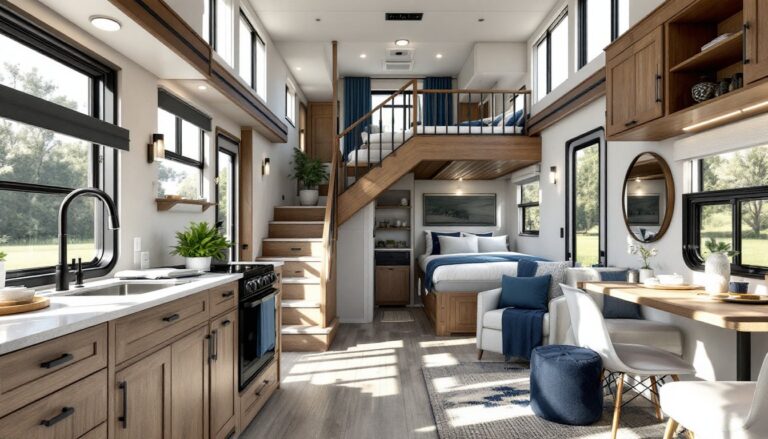
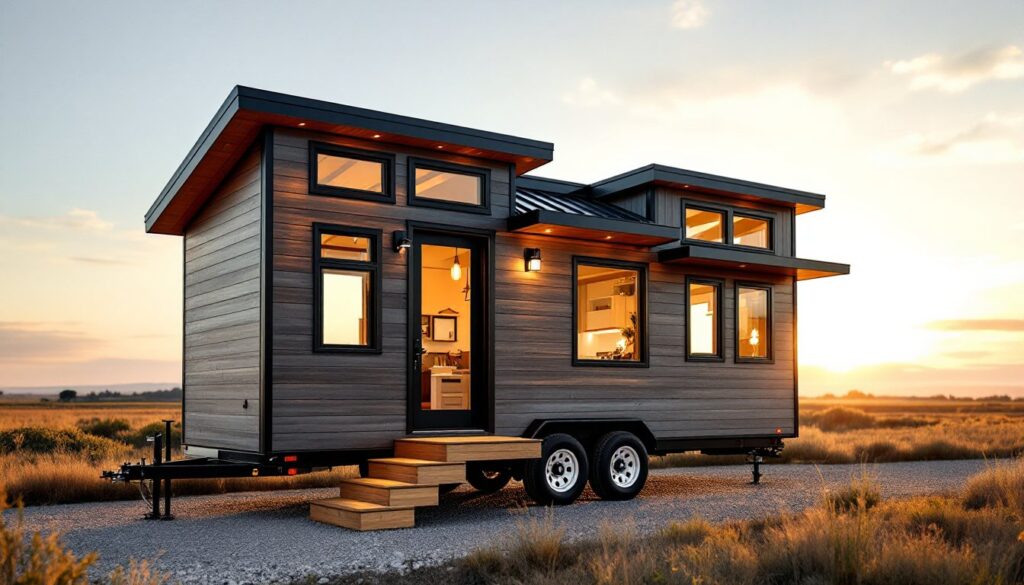
Cabinets and built-ins define luxury in these spaces. Custom cabinetry (rather than stock RV cabinets) with soft-close hinges, internal dividers, and quality hardware costs more upfront but transforms how the space feels. A modern tiny house on wheels with contemporary design elements demonstrates how thoughtful material choices, matte black fixtures, natural wood tones, and restrained color palettes, create sophistication without overcrowding.
Appliances and fixtures break the mold of typical RV equipment. A full-size cooktop, residential dishwasher, and proper ventilation hood (not a recirculating fan) elevate functionality. Bathroom fixtures often include a walk-in shower (a luxury in tiny houses) with a proper exhaust fan to prevent mold, solid-surface countertops, and a vanity with real storage. Finish choices, matte-black faucets, porcelain tile accents, and quality caulking, convey attention to detail.
Practical Considerations: Cost, Maintenance, and Lifestyle
Owning a luxury tiny house on wheels requires honest assessment of hidden costs and lifestyle trade-offs. Purchase price is just the first number: towing insurance, specialized auto insurance (the unit itself and contents), annual inspections, and parking fees add up quickly. Many insurance companies don’t fully understand tiny house trailers, so quotes vary wildly, expect $800 to $2,000 annually depending on value and location.
Maintenance differs from traditional homes. Roof sealants degrade annually and require resealing to prevent water intrusion. The undercarriage needs regular inspection for rust, especially in coastal or salt-heavy climates. Connections (propane, water, electrical) at the hitch require annual checks. Tires on the trailer itself have a lifespan: replacing a set can run $1,500 to $3,000. Unlike a stationary house, movement amplifies wear, cabinet latches, window seals, and plumbing connections experience vibration stress.
Lifestyle compatibility is real. Parking a tiny house on wheels involves zoning restrictions, HOA bylaws, and RV park regulations. Many RV parks allow stays of only 30 days: long-term parking on private land requires owner permission and often permits. Full-time living requires mail forwarding, vehicle registration logistics, and honestly confronting how you’ll feel living in 192 square feet year-round. Social gatherings, hobbies requiring storage, and guests staying overnight need realistic planning.
Design inspiration sources like Design Milk showcase how contemporary design principles apply to compact living, but aspiring owners should spend time in similar units before committing. Renting a comparable space for a week reveals whether the lifestyle suits you. Many enthusiasts find the tradeoff worthwhile, reduced living costs, environmental footprint, and genuine freedom, while others discover that the constraints don’t match their actual needs.
Conclusion
A luxury modern tiny house on wheels succeeds when design, materials, and lifestyle align. The 24×8.5-foot format offers enough space for genuine comfort without the upkeep of larger residences. Investment in premium finishes, smart layouts, and quality construction delivers a space that doesn’t feel cramped even though its footprint. Before purchasing, spend time in the actual unit, calculate all ownership costs, verify local zoning permits, and honestly assess your daily habits. When the fit is right, these homes deliver freedom and elegance in equal measure.